From the lobby to the living space
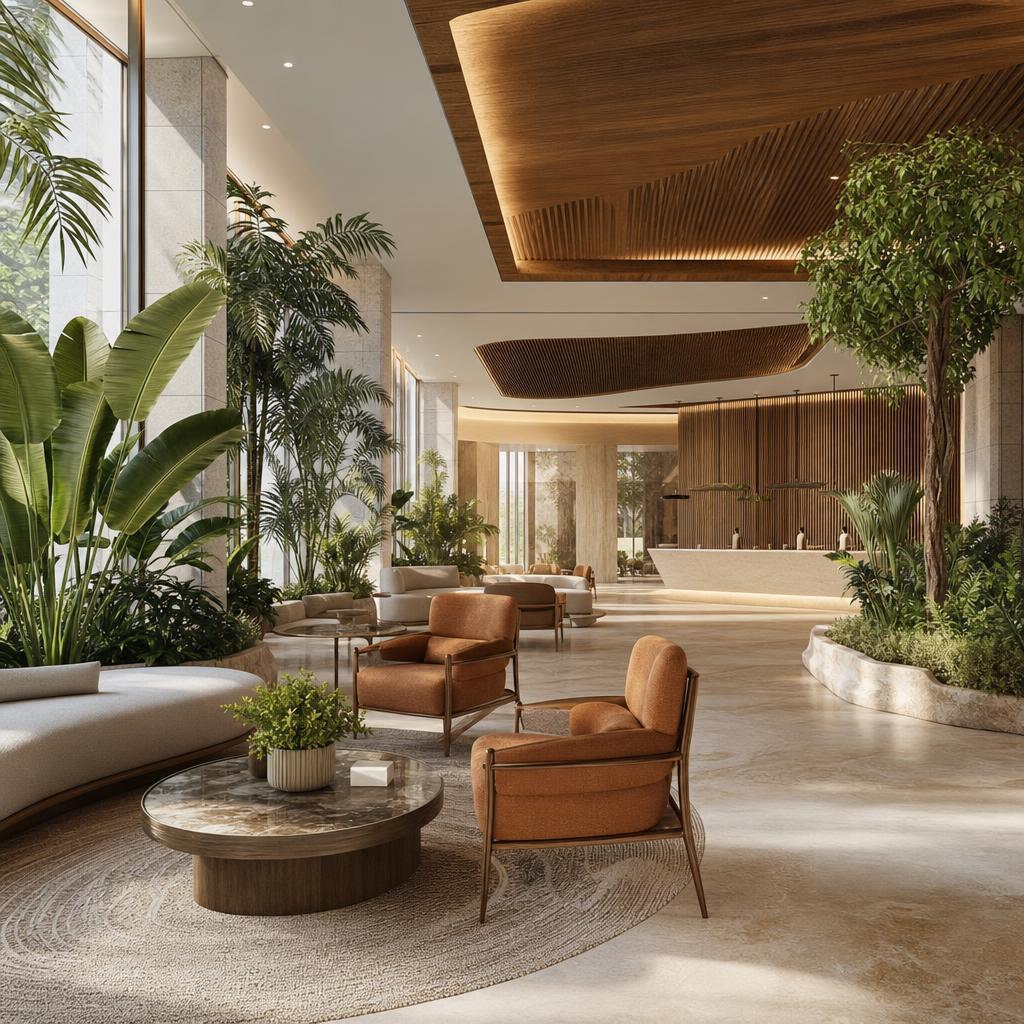
The hotel has long conceived its lobby as a transitional area: you arrive, you register, you go up to your room. This space represented a cost (surface, cleaning, energy) without generating direct income. The ongoing change completely reverses this logic: the lobby becomes a destination area, frequented by the hotel residents but also by the local clientele.
This transformation is not just aesthetic. It responds to several converging trends: the demand for third-party locations in cities, the development of cleanliness, the increasing importance of local anchoring for boutique hotels, and the pressure on filling rates during the day.
Hybridization at times of the day
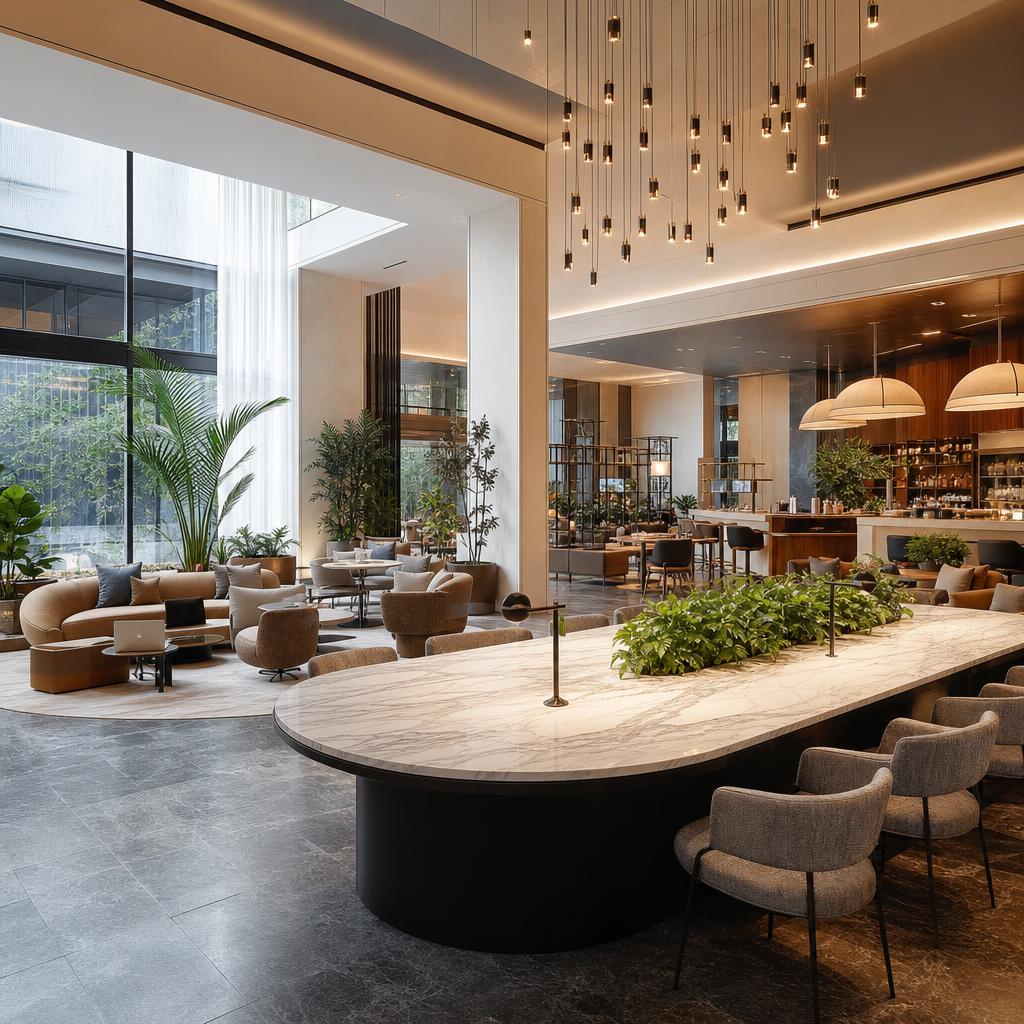
The key to the multifunctional lobby is time programming. The same space can be a neighborhood café in the morning, an afternoon coworking space, an evening cocktail bar and a light dining place at the beginning of the night. This modularity requires careful reflection on furniture (variable table heights, integrated electrical sockets, adjustable lighting) and on service logistics.
Modular furniture is an investment, not an economy. The tables that assemble and separate, the seats that can be moved, the light bulkheads: these equipments allow to reconfigure the space in less than twenty minutes and adapt each moment of the day to its specific promise.
The lobby bar: the first revenue center to activate
The lobby bar is the natural hub of transformation. Well designed, it attracts both residents and a loyal local clientele, which returns independently of any accommodation booking. Its success is based on three factors: a short but worked menu (signature cocktails, local producers' wines, creative cocktails); a strong visual identity that distinguishes the bar from the rest of the hotel; and regular programming (DJ on Thursdays, tasting on Saturdays, brunch breakfast on Sundays).
The average ticket for a premium lobby bar is between 18 and 35 euros per person. With attendance of 40 to 80 per evening, the additional income is substantial.
Coworking and workspaces: capturing the day demand
The demand for third-party premium locations is exploding in all medium-sized cities and large cities. Nomadic professionals, consultants and travelling teams are looking for comfortable, well-connected workspaces with a light catering service and an inspiring atmosphere. The hotel is the natural response to this need.
Monetization can take several forms: monthly subscription for unlimited access (400 to 600 €/month), half day or single day (25 to 50 €), work package + lunch + unlimited coffee (45 to 65 €). These offers are intended for both local businesses and hotel residents who extend their stay.
Events, retail and cultural programming
The most innovative hotels go beyond F&B and coworking. They program temporary exhibitions of local artists in the lobby, organize private company dinners, host presentations of partner brands, or offer a curative detail (local products, art books, designer objects) that generates additional income and enriches the experience.
A hotel that programmes its public space becomes a cultural address in its city. It is a notoriety tool that cannot be purchased only with an advertising budget.
Performance indicators
To measure the performance of a multifunctional lobby, the key indicators are: the RevPASH (Revenue Per Available Seat Hour) for the F&B, the occupancy rate of the coworking space per half day, the average basket per customer segment (resident vs. local), and total use of the public space distinct from the occupancy rate of the rooms. These indicators make it possible to refine programming and identify hollow moments to boost.
Our perspective
The hotel lobby of the future is more like an open membership club than a lobby. This change requires an investment in design, staff and programming, but it generates revenues, loyalty and reputation that go far beyond what only chambers can produce.